


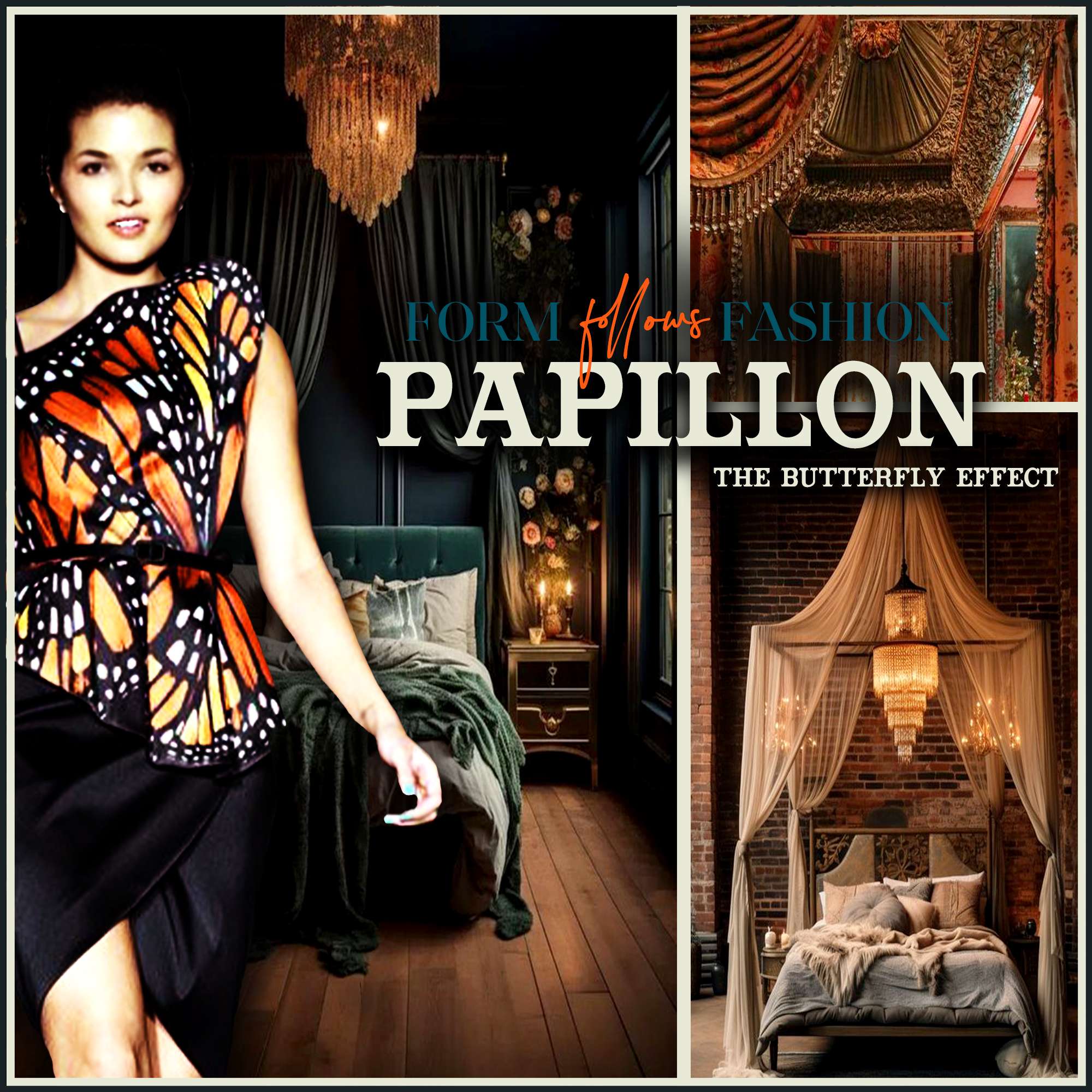
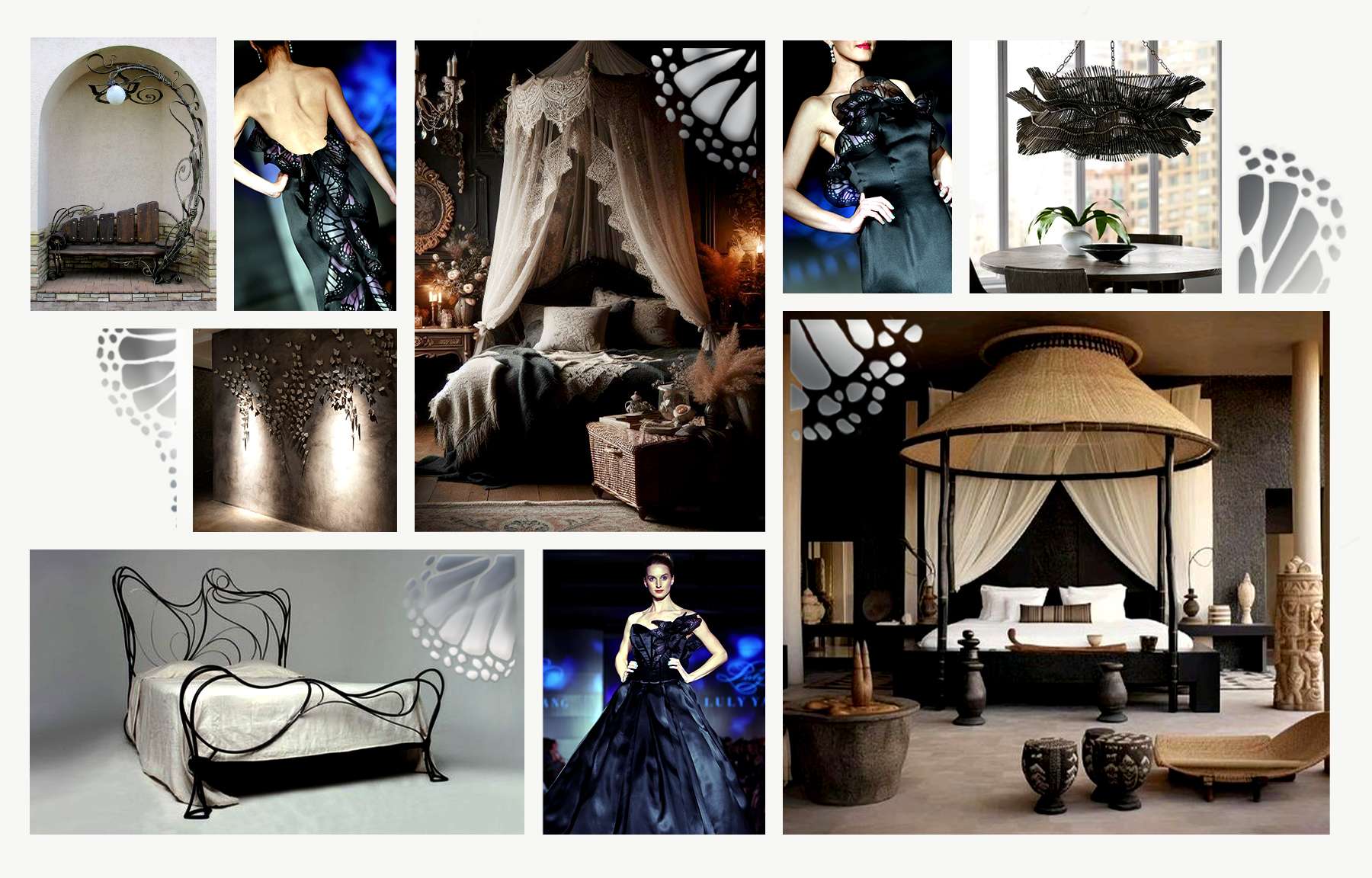
This season, our Form Follows Fashion adventures bring us cocoon-like interiors inspired by butterfly fashions. What a fun sentence! But, what does it mean?
It means we are knocking at the door of Luly Yang Couture, a Seattle-based fashion design house of more than 20 years. Creator of the iconic Monarch butterfly dress, Luly Yang is an award-winning, internationally recognized designer of couture fashion, bridal pieces, bespoke suiting, and red carpet ensembles.
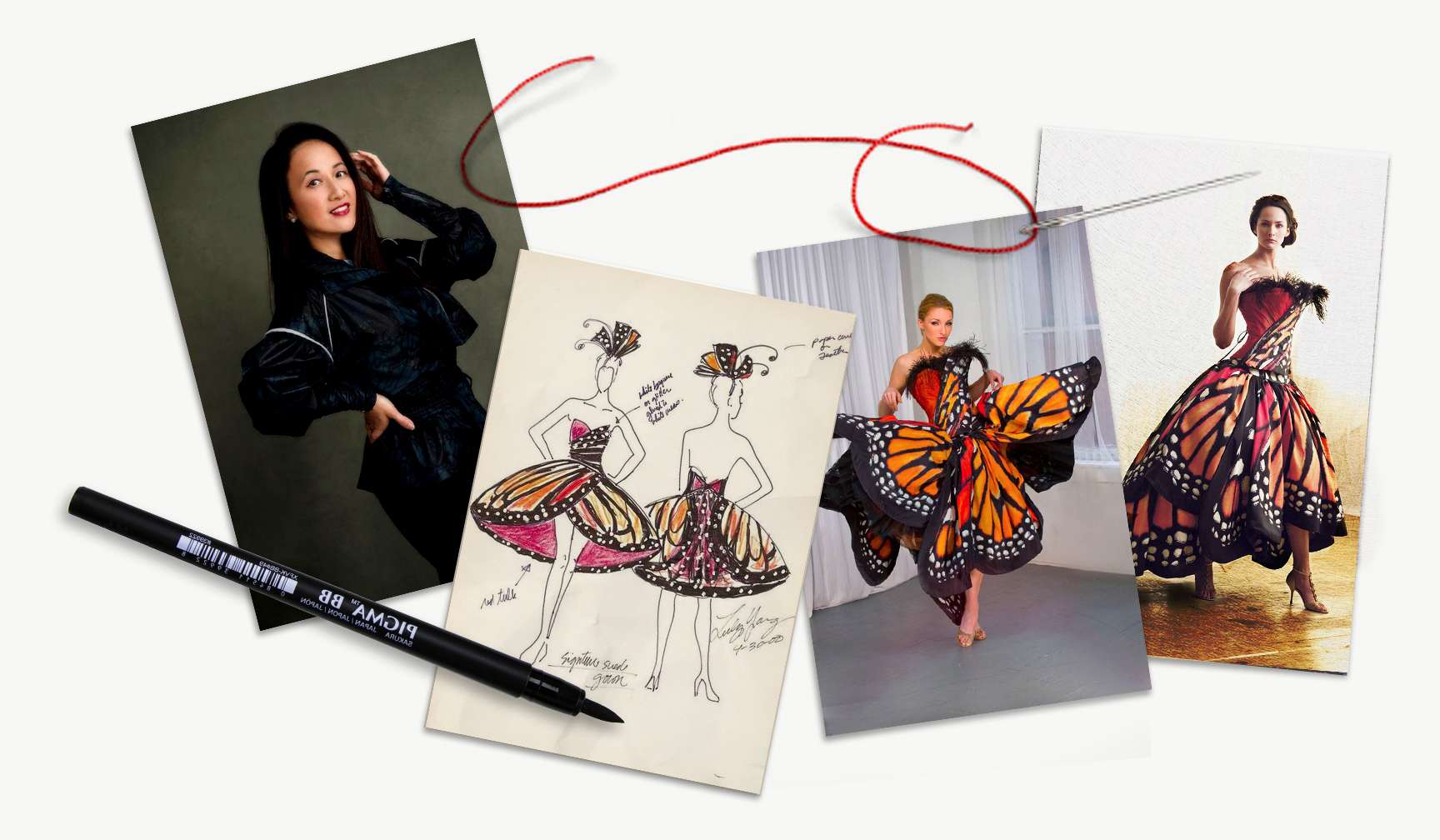
Luly’s unique design approach places a great emphasis on both form and function, influenced by architecture and engineering. Her designs demonstrate an understanding of the complexity and beauty of the human form, as well as an awareness of the natural world. And it is her couture lines “The Butterfly Effect” (2015) and “A Monarch’s Tale” (2012) that act as our main source of inspiration this past 2024 fall season.
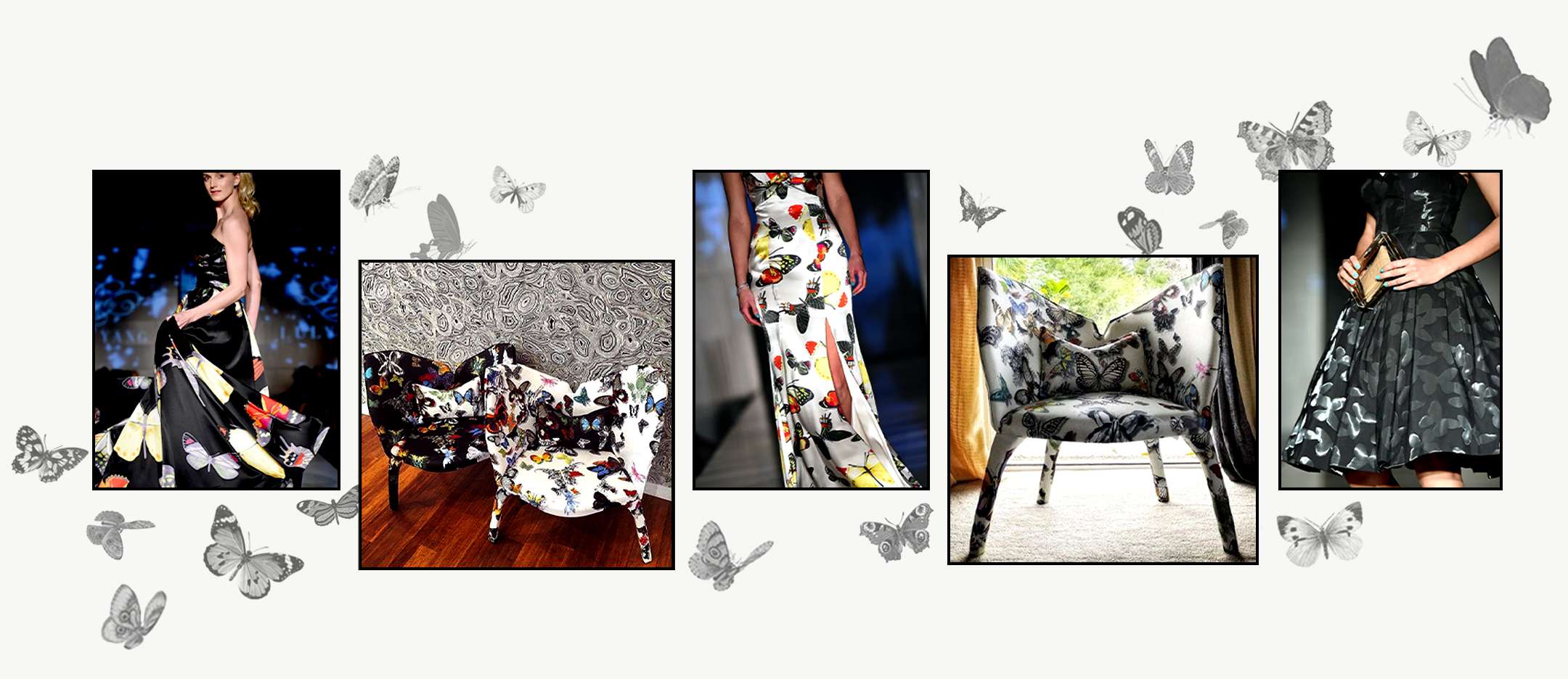
The Butterfly Effect
Perhaps you have heard the term “butterfly effect”—the idea that everything in the world is so deeply connected that the flap of a butterfly’s wing could become the cause of a typhoon. Likely, you have seen evidence of this phenomenon in your own life, where the tiniest act creates a massive change. Can this not be true for your fashion choices or your interior space?
Your environment influences your emotions, your energy levels, your thoughts, and your experiences. As such, creating a space wherein you can relax is vital to your wellbeing.

Like the transformation from caterpillar to butterfly, humans need a safe and comfortable space in order to heal, recover, and evolve. Our homes act as spaces to cocoon and cradle our bodies and our lives. A chrysalis of brick and mortar. Thus, every aspect of our homes should be tailored to our needs and preferences in order to create a cozy personal retreat.
Cocooned Canopies
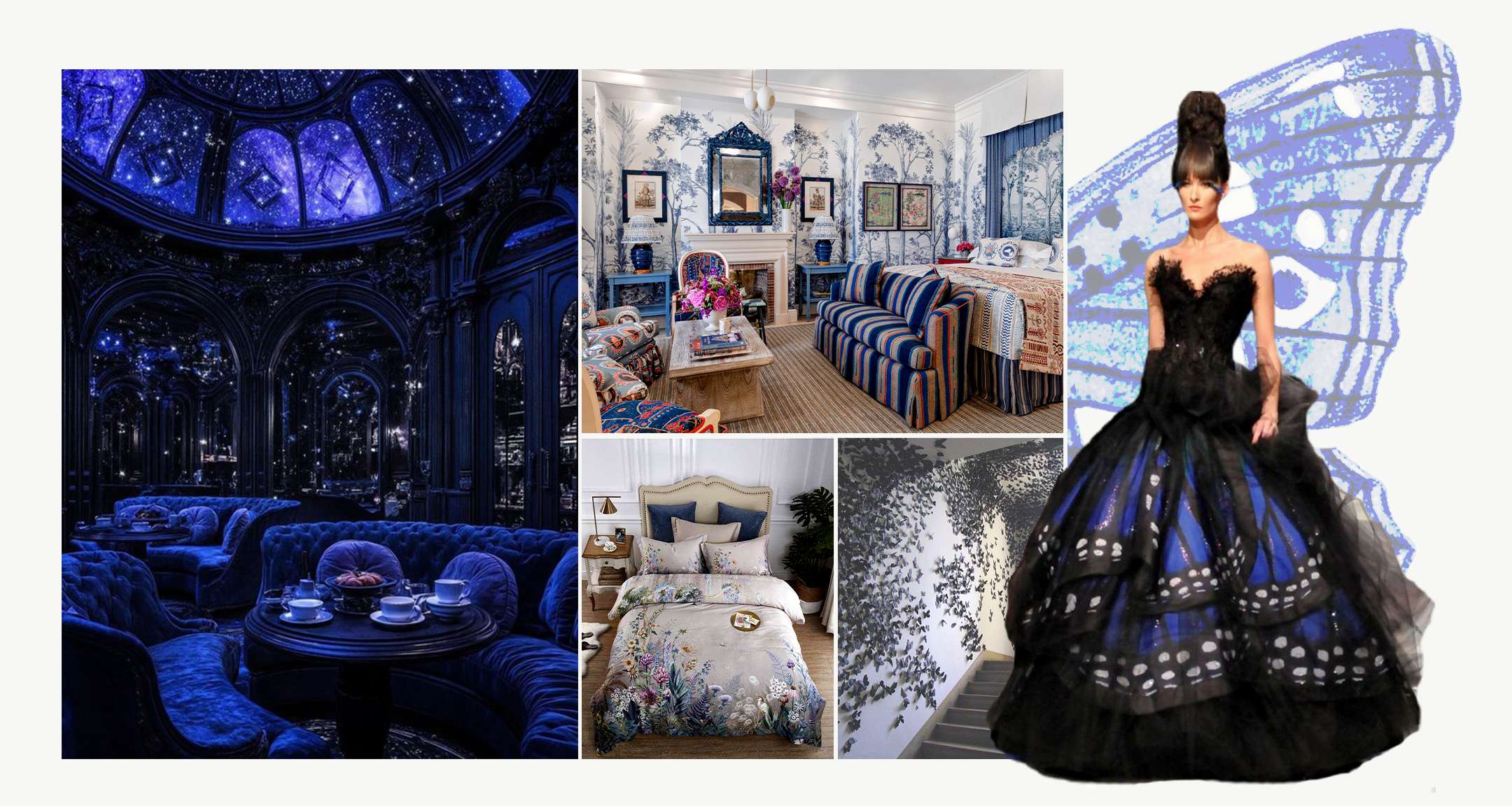
How do you make a home feel like a cuddly cocoon? Canopy beds create makeshift cocoons that offer the perfect hideaway to block out the world. Soft fabrics hang above the space, giving the sense of being wrapped in a snug little blanket. These havenlike spaces provide a comfortable chrysalis to which inhabitants can retreat every night, allowing time to heal and restore.
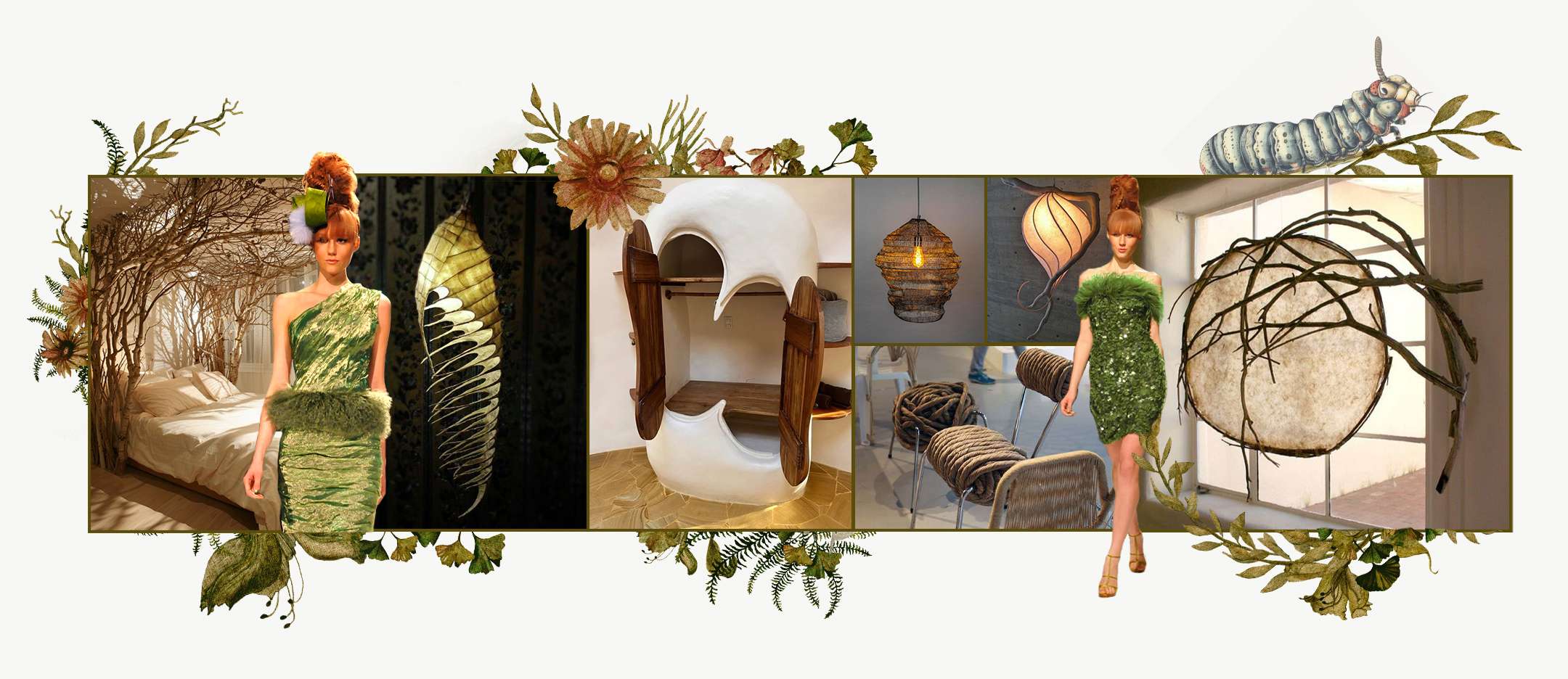
Likewise, seating spaces nestled into nooks are undeniably inviting, whether it is an architectural alcove or a constructed canopy. Gauzy fabrics and reptant branches create an aesthetic like that of a forest overhang and a secret garden. These designs imitate the natural world and instantly soothe the mind, giving the impression of security and allowing our bodies to leave behind daily stresses.

Everyday Softness
Like Luly Yang’s designs in her 2012 line, “A Monarch’s Tale”, comfortably cocooned interiors focus on soft luxury in every aspect of the space. For example, the Yang dresses have an element of softness in every piece—smooth silks, warm tones, velvety textures. Even the icy, sharp Antarctica-inspired designs are softened with furs and flutters.
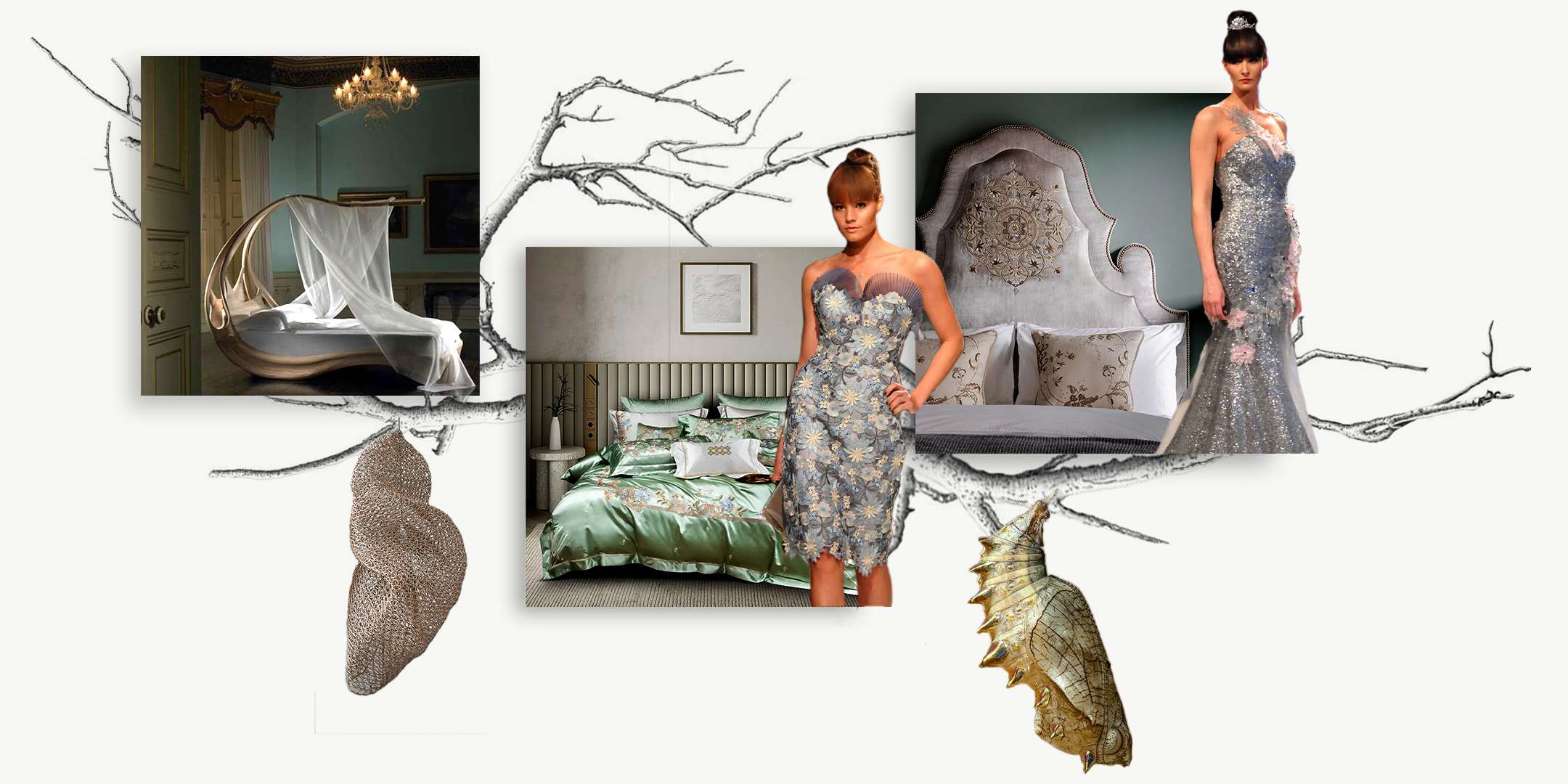
Similarly, interior spaces can be edgy and bold without being jarring or harsh. Soft, luxurious textiles create an enticing texture, like the silky bedding in the images above and below. The way the light reflects off these silks makes the space feel both elegant and comfortable at the same time.

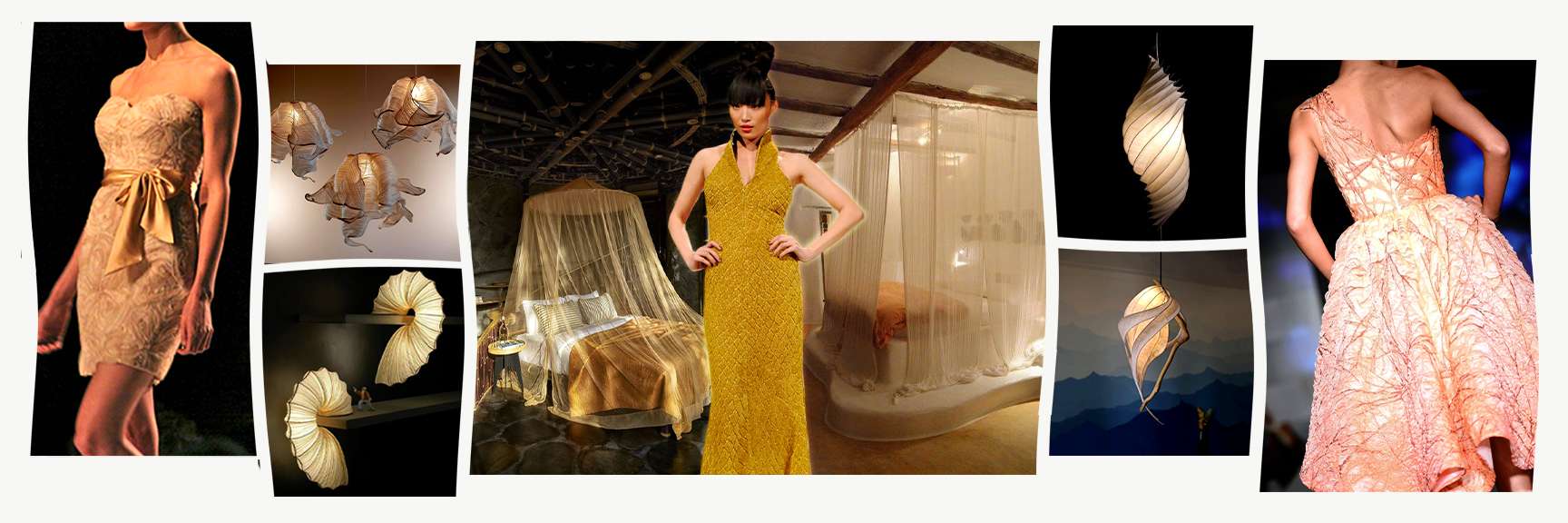
Additionally, lighting from gauzy lampshades or filtered light fixtures add a hazy glow, softening the colors and lines of the space. The warm lighting featured below creates a pleasant and relaxing aura that soothes the eye, lulling you into a sense of calm. Though these characteristics are simple, an interior design that feels cozy and sheltered allows your thoughts to slow and your heart to calm, giving physical indications that you are home.
“Great design inspires us to become the best versions of ourselves, elevates our experiences, and celebrates our individuality.”
– Luly Yang
When we acknowledge the human need to retreat and heal our bodies and souls, we create spaces that act as physical and spiritual refuge. Great interior design provides a place that feels like an individual sanctuary, a place that brings joy and peace. Perhaps these spaces can be the flap of a butterfly’s wing, causing a ripple effect that transforms our lives. And, perhaps, we will become that butterfly—metamorphosed to embrace our unique identities and cause similar ripples in the lives of our friends, in our places of work, and in the world we inhabit.


